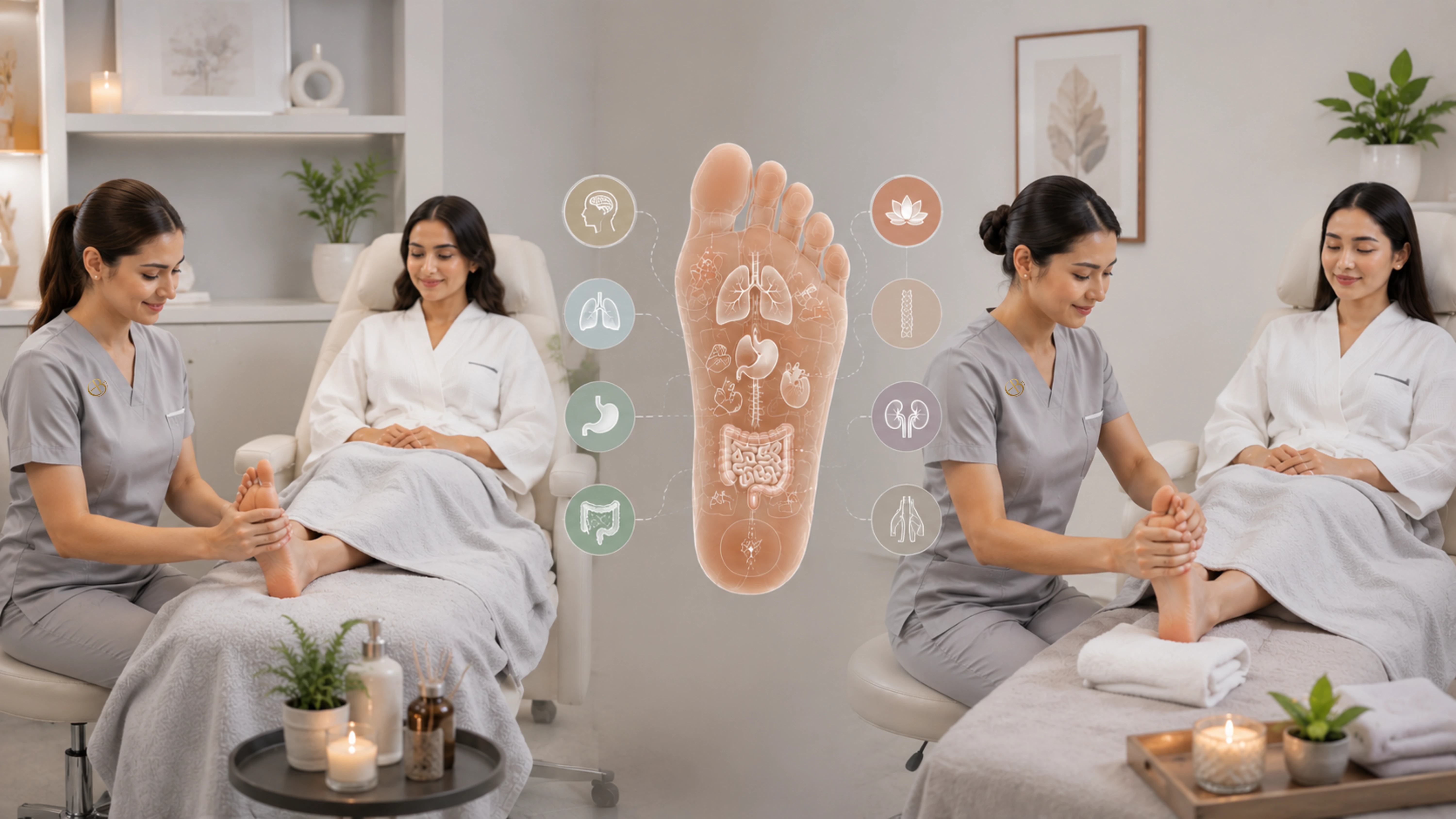
When comparing reflexology vs foot massage, the two treatments may look similar, but they follow different techniques and purposes. A foot massage mainly focuses on relaxing tired muscles and easing tension in the feet, while reflexology uses targeted pressure on specific reflex points. At EBH Academy, students can learn professional reflexology techniques through practical training designed for aspiring wellness professionals and therapists who want to expand their skills and offer specialized treatments in spas and wellness settings.
What Is Reflexology?
Reflexology is a complementary wellness technique that uses controlled pressure on specific reflex points, mainly on the feet and sometimes the hands.
Unlike a general massage, practitioners follow a structured reflex map and work on selected areas using specific thumb and finger techniques.
Professional reflexology training can include:
- Understanding reflex zones and maps
- Identifying important reflex points
- Applying controlled pressure correctly
- Foot and hand reflexology techniques
- Client consultation
- Understanding contraindications
- Hygiene and safe treatment practices
At EBH Academy, students learn these techniques through theoretical knowledge combined with practical training.
What Is a Foot Massage?
A foot massage focuses directly on the muscles and soft tissues of the feet. It is commonly used as a relaxation treatment, particularly for people who spend long periods walking or standing.
Common foot massage techniques include:
- Gentle rubbing and stroking
- Kneading the feet
- Circular massage movements
- Gentle stretching
- Applying pressure to tense areas
- Relaxation-focused movements
Rather than following reflex points, the therapist generally works directly on areas of muscular tension and discomfort.
Reflexology vs Foot Massage: What Is the Difference?
The main difference between reflexology vs foot massage is the approach used during the treatment.
Reflexology
Reflexology follows a structured system of reflex points and uses targeted pressure techniques.
It typically involves:
- Specific reflex zones
- Thumb and finger pressure
- Structured reflex maps
- Targeted techniques
- Foot or hand treatment
- Specialized practitioner knowledge
Foot Massage
Foot massage focuses more directly on relaxing muscles and soft tissues within the feet.
It commonly involves:
- Kneading
- Rubbing
- Stretching
- Circular movements
- Muscle-focused pressure
- General relaxation techniques
Both treatments can provide a relaxing experience, but the techniques and professional knowledge behind them are different.
What Does a Reflexology Session Involve?
A professional reflexology session usually begins with a consultation. This allows the practitioner to understand the client's needs and identify any factors that may affect the treatment.
A typical session may include:
- Client consultation
- Preparation of the feet
- Assessment before treatment
- Application of reflexology techniques
- Targeted pressure on reflex points
- Client comfort monitoring
- Appropriate aftercare advice
Learning this complete process is important for anyone planning to offer reflexology professionally.
Reflexology vs Full Body Massage
The difference between reflexology vs full body massage is even clearer because the treatments focus on different areas and use different techniques.
Full body massage works directly on muscles and soft tissues across several areas of the body.
These may include:
- Back
- Shoulders
- Neck
- Arms
- Legs
- Feet
Reflexology, however, is much more localized. Practitioners usually work primarily on the feet or hands using specific pressure points and reflex zones.
Reflexology vs Full Body Massage: Which Is Better?
There is no single treatment that is better for everyone. The right choice depends on the client's preferences and the type of wellness experience they want.
Reflexology may appeal to clients looking for:
- Targeted pressure-point techniques
- A localized treatment
- Foot or hand-focused sessions
- A structured complementary wellness treatment
Full body massage may appeal to clients looking for:
- Direct muscle relaxation
- Treatment across multiple body areas
- Broader massage movements
- A traditional massage experience
For therapists, learning both techniques can help create a more diverse professional treatment menu.
Is Reflexology the Same as a Regular Foot Massage?
This is one of the biggest misconceptions surrounding reflexology vs foot massage.
Both treatments involve the feet, but their methods are different.
A regular foot massage focuses mainly on muscles and soft tissues. Reflexology involves applying controlled pressure to specific reflex points according to a structured reflexology system.
This means professional reflexology requires additional knowledge of reflex maps, pressure techniques, consultation, contraindications, and treatment procedures.
Why Learn Reflexology Professionally?
Professional training helps students move beyond simply knowing where reflex points are located. They also learn how to deliver a complete treatment safely and confidently.
Important skills can include:
- Reflex-point identification
- Correct thumb and finger techniques
- Pressure control
- Client positioning
- Client consultation
- Recognizing contraindications
- Hygiene procedures
- Professional treatment structure
These skills can be particularly useful for massage therapists, beauty professionals, spa therapists, and people starting careers within the wellness industry.
Read Also: How to Become a Spa Therapist: Qualifications, Skills, and Career Path
Learn Reflexology at EBH Academy in Dubai
The EBH Academy Reflexology Course in Dubai provides practical training for students who want to develop professional reflexology skills.
The course covers important areas such as:
- Reflexology theory
- Anatomy and reflex points
- Foot reflexology techniques
- Hand reflexology techniques
- Pressure-point techniques
- Client consultation
- Contraindications
- Health and safety
- Practical treatment experience
The training is suitable for beginners as well as existing beauty, massage, and wellness professionals who want to expand their treatment skills.
Build Your Reflexology Skills with EBH Academy
Understanding reflexology vs foot massage is useful, but becoming confident in reflexology requires proper practical training. EBH Academy in Dubai provides hands-on reflexology education designed to help students understand reflex points, develop professional pressure techniques, and learn how to structure treatments safely. Whether you're beginning a wellness career or adding another service to your existing treatment menu, Contact us and take the next step in developing your professional skills.
Frequently Asked Questions
1- What is the main difference between reflexology and foot massage?
Foot massage mainly focuses on muscles and soft tissues using techniques such as rubbing, kneading, and stretching. Reflexology uses controlled pressure on specific reflex points according to a structured reflexology system.
2- Is reflexology a type of foot massage?
Reflexology and foot massage both involve working on the feet, but they are different techniques. Reflexology follows specific reflex points and zones, while foot massage generally focuses directly on muscles, tension, comfort, and relaxation.
3- Reflexology vs full body massage: what is the difference?
Full body massage works directly on muscles and soft tissues across different areas of the body. Reflexology usually concentrates on specific points on the feet or hands using targeted pressure techniques.
4- Can beginners learn reflexology?
Yes. Beginners can learn reflexology through structured professional training that introduces reflex maps, pressure techniques, consultation procedures, contraindications, hygiene, and practical treatment methods.
5- Who can benefit from learning reflexology?
Reflexology training can be useful for aspiring wellness professionals, massage therapists, beauty therapists, and spa professionals who want to expand their skills and add a specialized treatment to their professional service menu.